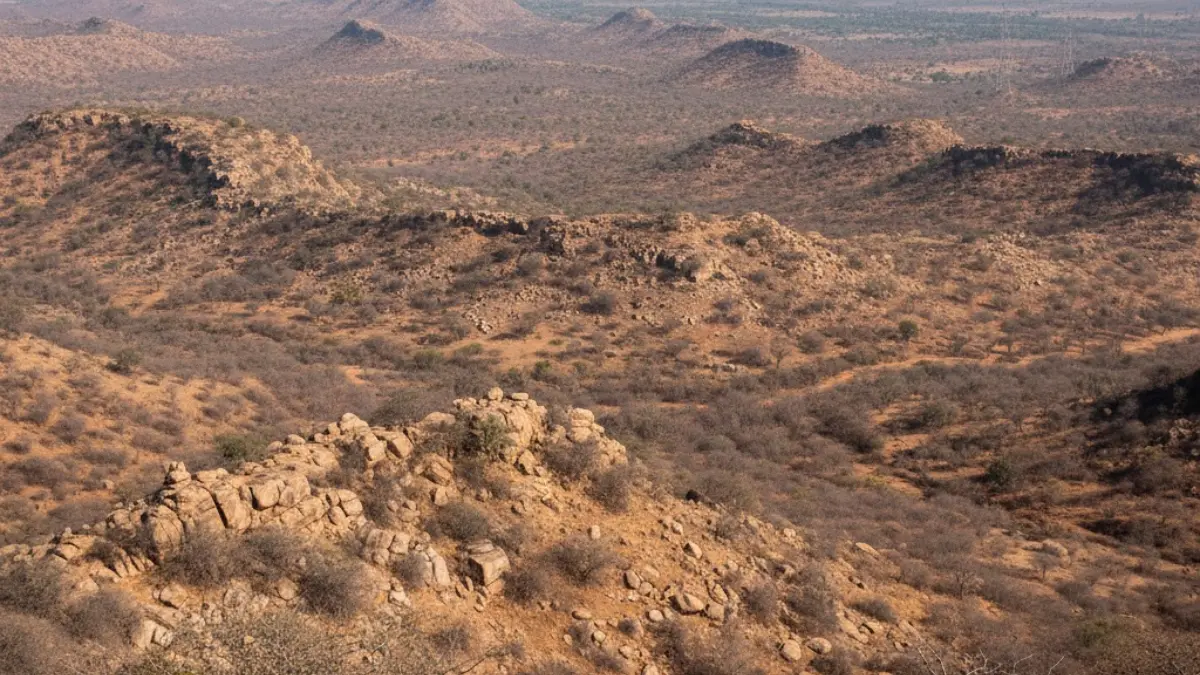
Aravalli Hills ka naam aate hi logon ke dimaag me turant Rajasthan ki tasveer aa jati hai. Registan, dry land, mining aur rural areas. Ye perception itna strong hai ki Haryana, Delhi NCR aur Gujarat me Aravalli ka role almost invisible ho chuka hai. Ye sirf misunderstanding nahi hai, ye ek dangerous oversimplification hai.
Is galat perception ki sabse badi wajah geographical branding hai. Rajasthan ki identity desert aur Aravalli ke saath tightly jodi gayi hai. School textbooks, tourism promotion aur media narratives ne Aravalli ko Rajasthan-centric bana diya. Result ye hua ki log Aravalli ko ek “state-level feature” samajhne lage, jabki mountain ranges state boundaries follow nahi karti.
Reality ye hai ki Aravalli Hills ek continuous system hai jo Gujarat se start hokar Rajasthan, Haryana aur Delhi NCR tak faila hua hai. Is system ka effect administrative borders se control nahi hota. Hawa, heat, dust aur moisture kisi state border par ruk kar permission nahi lete. Lekin public discourse me environment ko hamesha political boundaries me baandh diya jata hai.
Doosri badi wajah hai impact ka indirect nature. Rajasthan me Aravalli ka damage visually clear dikhta hai. Mining scars, barren hills aur dust visible hote hain. Delhi NCR me impact indirect hota hai. Zyada garmi, pollution, water scarcity. Log effect dekhte hain, cause nahi. Jab cause door dikhta hai, to responsibility bhi door shift ho jati hai.
Policy level par bhi ye problem repeat hoti hai. Har state Aravalli ko “dusre state ka issue” maan kar treat karti hai. Rajasthan mining regulate kare, Haryana construction allow kare, Delhi sirf pollution par focus kare. Is fragmented approach me Aravalli ek integrated ecosystem ke roop me treat hi nahi hoti. Jab ecosystem ko tukdon me baant diya jata hai, to protection impossible ho jati hai.
Urban bias yahan bhi kaam karta hai. Shehri log environment ka matlab forests aur national parks samajhte hain. Aravalli ka jo hissa NCR ke paas hai, wo peri-urban hai. Na proper jungle, na proper city. Is beech ke space ko log waste land maan lete hain. Jab land ko waste samjha jata hai, to uska destruction development lagta hai.
Media narrative bhi problem ko narrow bana deta hai. Jab Rajasthan me mining ya deforestation hoti hai, tab “Aravalli under threat” headlines banti hain. Jab Gurgaon ya Faridabad ke paas hills cut hoti hain, tab use “real estate development” bol diya jata hai. Same ecosystem, different language. Language change hoti hai, seriousness khatam ho jati hai.
Ek aur reason hai administrative convenience. Multi-state ecosystems ko manage karna mushkil hota hai. Ek state, ek ministry, ek responsibility. Aravalli jaisa system is model me fit nahi hota. Isliye ise simplify karke Rajasthan ke naam par chipka diya gaya. Jo cheez complex hoti hai, system use ignore karna prefer karta hai.
Public level par ignorance bhi is problem ko push karti hai. Haryana ya Delhi ka resident jab Aravalli sunta hai, to usse lagta hai ye Rajasthan ka issue hai, to uski life se direct link nahi hai. Jab tak problem apne shehar ke naam se nahi judi hoti, tab tak log use urgent nahi maante. Ye human psychology ka basic flaw hai.
Sach ye hai ki Aravalli Hills ka damage North India ke climate ko collectively impact karta hai. Desertification, heatwaves, dust pollution aur groundwater stress kisi ek state me confined nahi rehte. Rajasthan me jo hota hai, uska effect Haryana aur Delhi me feel hota hai. Lekin jab framing hi galat hoti hai, to solution bhi galat direction me chala jata hai.
Isliye Aravalli ko sirf Rajasthan ki problem samajhna scientifically bhi galat hai aur practically bhi. Ye ek regional ecosystem failure ka case hai, state-level issue nahi. Jab tak ye understanding public aur policy level par nahi aati, tab tak Aravalli ka slow collapse continue hota rahega.
Simple shabdon me bolein to Aravalli Hills ko Rajasthan ke pin code me band kar dena North India ke liye sabse bada strategic mistake hai. Nature boundaries nahi maanta. Jo system is baat ko ignore karta hai, wo eventually uska price pay karta hai.