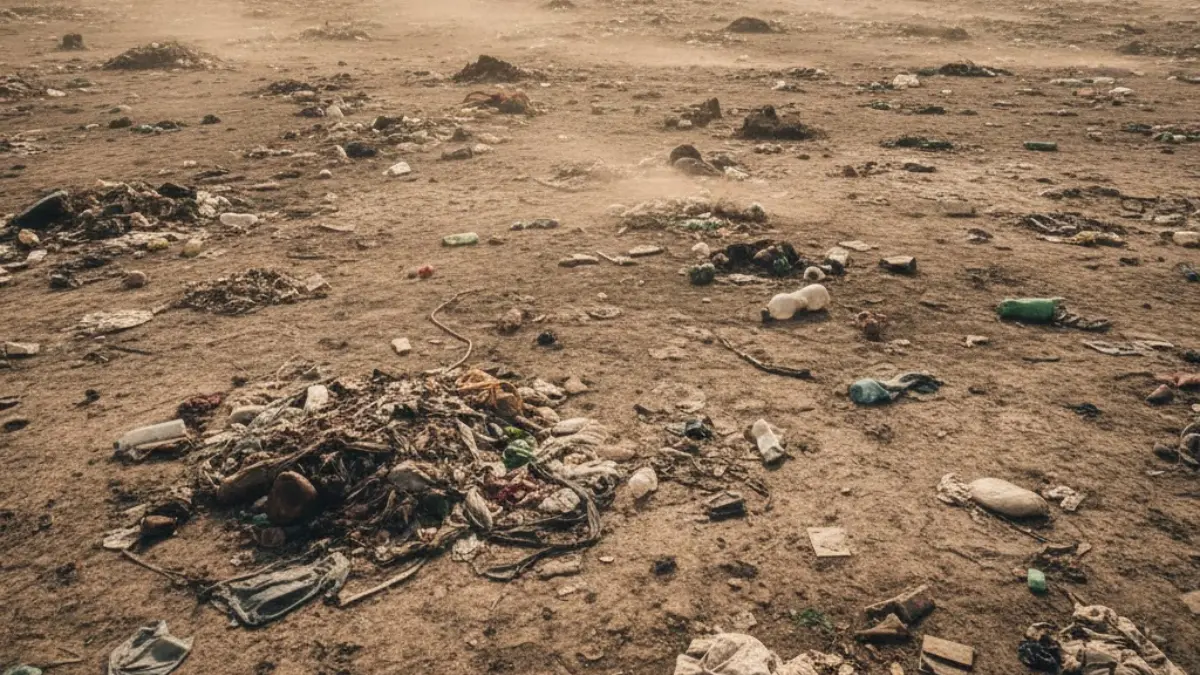
Pollution ki baat hote hi sabse pehle gaadiyon, factories aur fuel ka naam liya jata hai. Ye sources important hain, lekin picture adhuri hai. North India me pollution ka ek bada hissa zameen se uthta hai. Dry soil, construction debris aur disturbed land surfaces milkar hawa me aisa particulate matter bhejte hain jo lungs tak pahunchta hai. Is angle ko ignore karna pollution control ko half-solution bana deta hai.
Sabse pehla factor dry soil exposure hai. Jab land par vegetation hota hai, to soil bind rehti hai. Jab vegetation hat jati hai, to soil loose ho jati hai aur hawa ke saath udne lagti hai. Ye dust sirf rural issue nahi hai. Peri-urban areas, construction sites aur open plots se uthi hui mitti seedha cities me enter karti hai. Ye PM10 aur PM2.5 jaise pollutants ka silent source hai.
Construction activity is problem ko aur amplify karti hai. Jab land ko cut kiya jata hai, leveling hoti hai, ya roads ban rahi hoti hain, to surface disturb hoti hai. Agar dust suppression aur green buffers absent hon, to ye fine particles hawa me lambe time tak suspend rehte hain. Traffic in particles ko shehar ke andar spread kar deta hai. Result ye hota hai ki pollution ka blame gaadiyon par jata hai, jabki source zameen hoti hai.
North India me ye issue isliye aur serious ho jata hai kyunki natural buffers weak ho chuke hain. Historically, pahadi belts aur forested zones dust movement ko slow karte the. Jab ye systems degrade hote hain, to dust corridors ban jate hain. Isi context me Aravalli Hills ka role samajhna zaroori hai. Ye range western dry regions se aane wali dust ko partially block karti thi. Jab is area me land degradation hoti hai, to dust NCR aur surrounding cities tak zyada easily pahunchti hai.
Ek aur ignored source unmanaged open land hai. Cities ke aas-paas khaali plots, abandoned construction sites aur mining-affected areas padhe rehte hain. Ye land na fully developed hoti hai, na restored. Aisi surfaces pollution generators ban jati hain. Har strong wind event me ye areas particulate matter ka injection point ban jaate hain.
Water scarcity bhi dust pollution ko badhati hai. Jab soil moisture kam hoti hai, to dust particles aur easily airborne ho jaate hain. Groundwater depletion aur drying water bodies is process ko accelerate karte hain. Ye ek feedback loop hai: zyada heat → zyada dryness → zyada dust → aur zyada pollution.
Policy aur public discourse me pollution control ka focus aksar tailpipes aur chimneys par hota hai. Ye zaroori hai, lekin jab tak land management ko pollution strategy ka hissa nahi banaya jata, tab tak results limited rahenge. Zameen ko stabilize kiye bina hawa ko saaf rakhna practically impossible hai.
Health impact yahan direct hai. Dust-based pollution lungs ke liye zyada damaging hota hai kyunki ye heavy metals aur toxins ko carry karta hai. Long-term exposure se respiratory diseases, allergies aur cardiovascular issues badhte hain. Ye burden healthcare systems par padta hai, jabki root cause land degradation hota hai.
Simple shabdon me bolein to pollution sirf fuel jalne se nahi aata. Jab zameen ko expose aur disturb kiya jata hai, to wo khud ek pollution source ban jati hai. Agar cities aur surrounding regions me land ko stabilize nahi kiya gaya, to air quality improvements temporary rahenge.