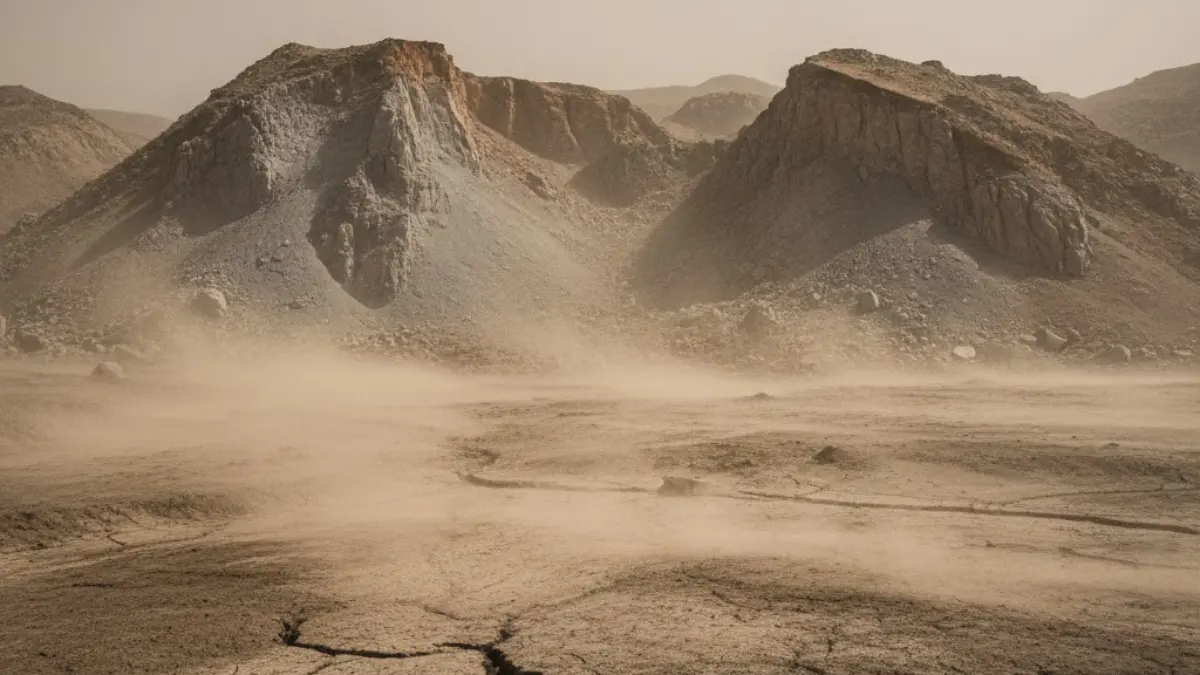
Pahadiyon ko aksar sirf landscape ya tourism ke angle se dekha jata hai. Jab road, mining ya construction ke liye pahadi kaati jati hain, to discussion visual damage tak simat kar reh jati hai. Reality ye hai ki pahadiyan hawa aur temperature ke natural regulators hoti hain. Jab ye natural systems disturb hote hain, to iska asar seedha climate behaviour par padta hai.
Sabse pehla aur direct effect wind behaviour par hota hai. Pahadiyan hawa ke flow ko slow karti hain, divert karti hain aur break karti hain. Ye ek natural speed-breaker ka kaam karti hain. Jab pahadi kaat di jati hain, to hawa ko koi resistance nahi milta. Result ye hota hai ki hot aur dry winds zyada speed aur zyada reach ke saath plains me enter karti hain. Ye sirf hawa nahi hoti, ye heat aur dust bhi carry karti hain.
Temperature regulation ka connection yahin se start hota hai. Jab hawa controlled flow me hoti hai, to heat dispersion gradual hota hai. Jab wahi hawa bina kisi barrier ke move karti hai, to heat rapidly spread hoti hai. Isliye pahadi regions ke aas-paas ke plains zyada garam hone lagte hain. Ye effect summer months me sabse zyada noticeable hota hai, jab already high temperatures aur amplify ho jate hain.
Pahadiyon par vegetation ka role bhi critical hota hai. Forested hills heat absorb karti hain aur moisture retain karti hain. Jab pahadi kaat di jati hai, to exposed rock aur soil direct sunlight reflect karti hai. Ye reflected heat surrounding areas ke temperature ko aur badhati hai. Is process me pahadi ka ecological role khatam ho jata hai aur wo heat source ban jati hai.
North India ke context me ye relation aur zyada important ho jata hai. Yahan plains already heat-prone hain. Jab surrounding hill systems degrade hote hain, to plains ke paas heat buffer nahi bachta. Isi wajah se recent years me heatwaves sirf intense nahi, balki zyada frequent ho rahi hain. Ye sirf global climate change ka result nahi, balki local geography ke breakdown ka effect bhi hai.
Dust movement bhi hawa aur temperature ke relation ko influence karti hai. Jab pahadi kaat di jati hain, to soil loose ho jati hai. Ye soil hawa ke saath udkar atmosphere me jati hai. Dust particles sunlight ko scatter karte hain aur thermal balance disturb karte hain. Din me ye heating ko amplify karte hain aur raat me cooling ko block kar dete hain. Isse diurnal temperature range abnormal ho jata hai.
Is process ka ek clear example Aravalli Hills ke region me dekha ja sakta hai. Jab Aravalli belt me mining aur hill cutting badhi, to western dry winds aur dust ka flow NCR aur Haryana ke plains me zyada deep penetrate karne laga. Ye sirf air quality ka issue nahi raha, balki temperature behaviour ka bhi issue ban gaya.
Pahadiyon ke katne ka impact sirf ek season tak limited nahi hota. Ye long-term climate shift create karta hai. Jab hill systems degrade ho jate hain, to unka recovery almost impossible hota hai. Plantation drives is damage ko compensate nahi kar sakti kyunki pahadi ka original structure, slope aur wind-interaction permanently change ho chuka hota hai.
Urban planning aur infrastructure projects me is relation ko aksar ignore kiya jata hai. Roads aur buildings short-term development dikha dete hain, lekin long-term me hawa aur temperature ka balance bigad jata hai. Iska cost cities ko zyada energy consumption, zyada cooling demand aur zyada health risks ke form me pay karna padta hai.
Simple shabdon me bolein to pahadiyon ka katna sirf zameen ka nuksaan nahi hai. Ye hawa ke natural flow ko todna aur temperature control system ko disable karna hai. Jab tak hill systems ko climate infrastructure ke roop me treat nahi kiya jata, tab tak garmi aur heatwaves ka problem control me aana mushkil rahega.