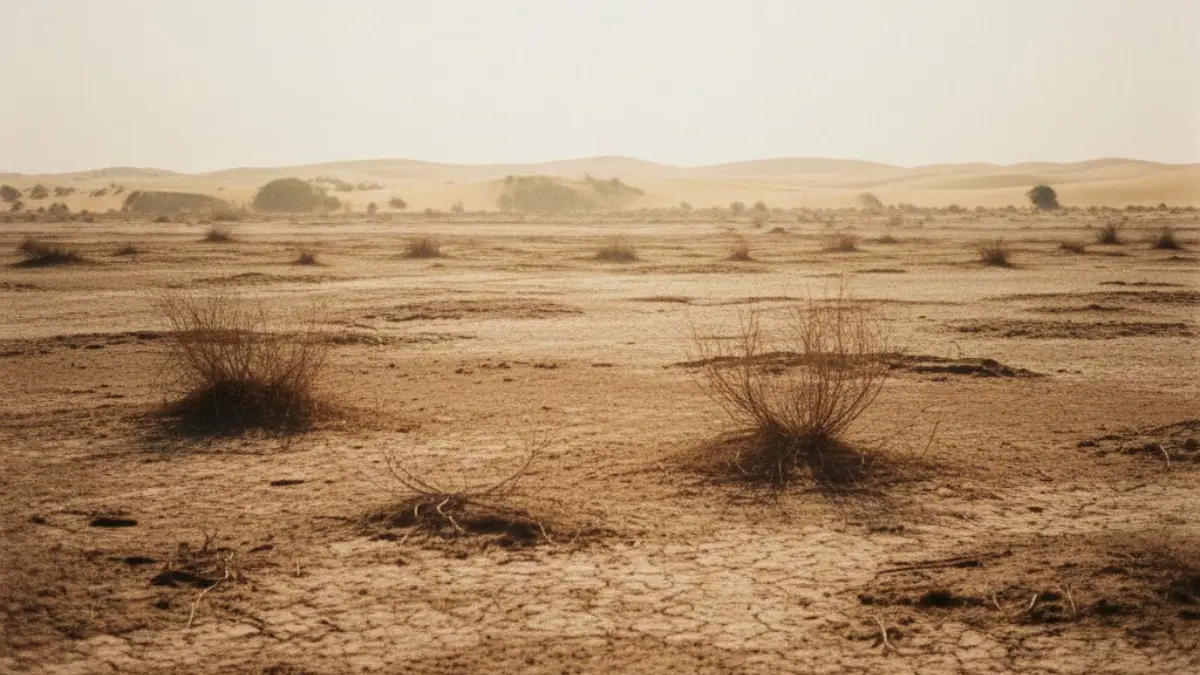
North India me garmi ka badhna ab seasonal issue nahi raha. Ye ek structural problem ban chuki hai. Har saal temperature ke naye records bante hain, heatwaves lambi hoti ja rahi hain aur normal summer aur extreme summer ke beech ka difference lagbhag khatam ho chuka hai. Is situation ko sirf “global warming” bol kar explain karna incomplete analysis hai. Asal reasons zameen par, landform me aur local systems ke breakdown me chhupe hain.
Sabse pehla factor land degradation hai. North India ke large areas me natural surfaces ko concrete aur bare soil ne replace kar diya hai. Jab zameen par vegetation hota hai, to wo heat ko absorb karta hai aur moisture ko retain karta hai. Jab wahi surface dry, exposed ya concrete ho jati hai, to heat seedha reflect hoti hai. Is process ko urban heat amplification kaha jata hai. Ye garmi ko sirf badhata nahi, balki use zyada der tak hold bhi karta hai.
Doosra critical factor natural buffers ka loss hai. North India historically kuch natural systems par depend karta raha hai jo heat ko regulate karte the. Inme pahadi regions, forest belts aur transitional zones shamil hain. Jab ye systems weak hote hain, to heat ka flow bina kisi resistance ke plains me spread ho jata hai. Isi context me Aravalli Hills ka role samajhna zaroori ho jata hai. Jab ye natural barrier degrade hota hai, to western dry heat aur dust aur zyada andar tak penetrate karti hai.
Teesra factor rainfall pattern ka distortion hai. Garmi ka intensity sirf temperature se decide nahi hota, balki moisture availability se bhi hota hai. North India me monsoon ka behaviour pichhle kuch saalon me zyada erratic hua hai. Kabhi short duration me extreme rainfall, kabhi long dry spells. Iska result ye hota hai ki soil moisture recover nahi kar pati. Dry soil heat ko aur zyada intensify karti hai. Ye ek feedback loop hai jisme garmi rainfall ko affect karti hai aur rainfall ki unpredictability garmi ko aur badhati hai.
Urban expansion ne problem ko aur serious bana diya hai. Cities jaise Delhi NCR, Gurugram, Faridabad aur Jaipur me open land rapidly shrink hua hai. High-rise structures hawa ke natural circulation ko block kar dete hain. Jab airflow slow hota hai, to heat dissipate nahi hoti. Isi wajah se nights bhi thandi nahi hoti, jo heat stress ko aur dangerous bana deta hai. Ye sirf discomfort ka issue nahi, public health ka issue hai.
Water stress bhi directly heat ke saath linked hai. Jab groundwater levels girte hain, to evaporation cooling ka natural effect kam ho jata hai. Pehle jab wells aur ponds zyada hote the, to surrounding areas naturally thande rehte the. Aaj jab water bodies gayab ho chuki hain, to land aur zyada heat trap karti hai. Isliye garmi ka asar sirf din me nahi, poore 24 ghante feel hota hai.
Ek aur ignored angle soil quality ka hai. Healthy soil moisture aur organic matter hold karti hai. Mining, construction aur overuse ne soil structure ko damage kiya hai. Jab soil lifeless hoti hai, to wo heat ko absorb nahi kar pati. Ye factor rural aur peri-urban areas me zyada dangerous hai kyunki yahan farming aur daily life directly climate par depend karti hai.
Media aur public discourse me garmi ko aksar “record temperature” ke form me dikhaya jata hai. Lekin ye approach problem ko oversimplify karti hai. Asli issue ye hai ki North India ka climate balance me land aur geography ka central role shift ho chuka hai. Heatwaves ab exception nahi rahi, ye naya normal ban rahi hain. Is shift ke peeche sirf global emissions nahi, balki local land use decisions ka bhi bada role hai.
Agar current trend continue raha, to garmi ka impact sirf discomfort tak limited nahi rahega. Agriculture productivity giregi, water demand badhegi aur cities ko survive karna aur mehenga hota chala jayega. Ye ek slow-moving crisis hai jo headline friendly nahi hai, isliye ignore ho jati hai. Lekin ignore karne se problem khatam nahi hoti.
Simple shabdon me bolein to North India ki garmi badh rahi hai kyunki natural systems jo isse control karte the, wo weak ho chuke hain. Jab tak land, water aur geography ko climate planning ka core part nahi banaya jata, tab tak har saal “sabse garm saal” ka record tootna normal rahega.