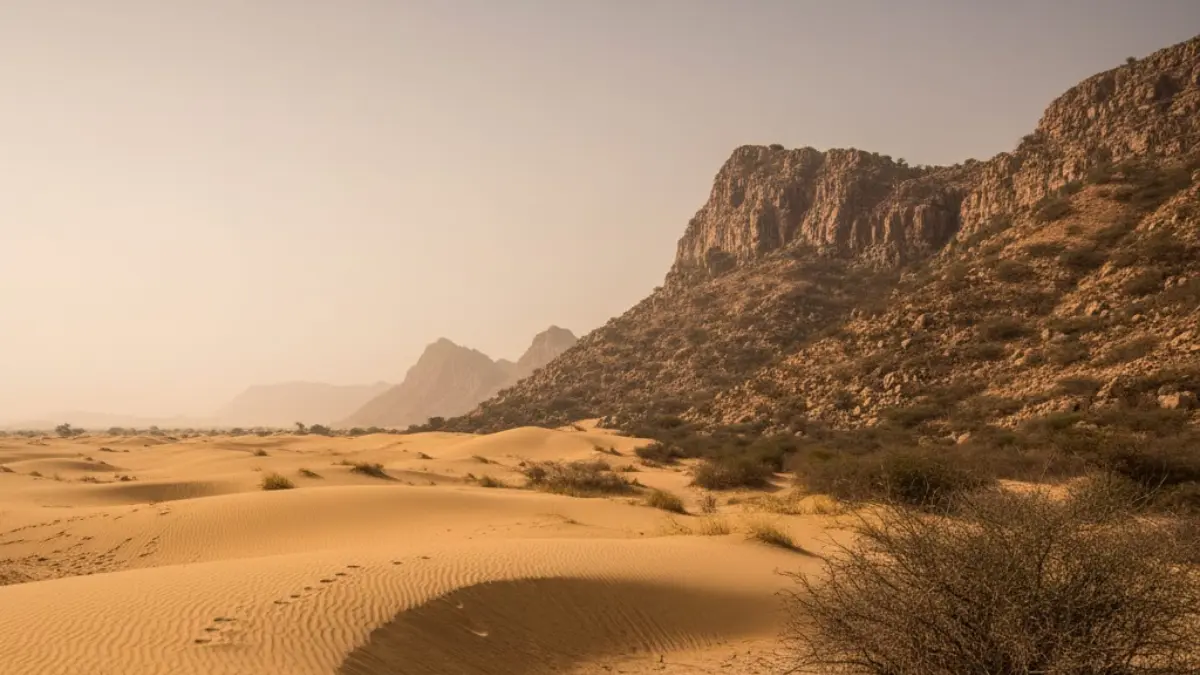
Zyada tar log ye maante hain ki Thar Desert ek natural desert hai jo hamesha se Rajasthan me hi tha aur Aravalli Hills ka isse koi direct lena dena nahi. Ye aadha sach hai, aur aadha sach sabse zyada dangerous hota hai. Reality ye hai ki Aravalli Hills aur Thar Desert ka connection sirf geography ka nahi, balki climate control ka hai.
Aravalli Hills historically ek natural climate divider ki tarah kaam karti rahi hain. Ye range Thar Desert aur fertile North Indian plains ke beech ek buffer zone banati thi. Jab western side se dry winds aur desert conditions expand hone ki koshish karti thi, tab Aravalli ka terrain, vegetation aur moisture cycle us expansion ko slow kar deta tha. Ye ek invisible wall thi, concrete ki nahi, nature ki.
Thar Desert ka existence natural hai, lekin iska spread natural nahi hai. Desert ka area stable tab tak rehta hai jab tak uske aas paas ke regions me green cover, moisture retention aur land stability bani rahe. Aravalli Hills is stability ka central pillar rahi hain. Jab ye hills strong thi, tab desert Rajasthan ke western belt tak hi limited tha.
Problem tab shuru hui jab Aravalli ka forest cover aur physical structure disturb hona laga. Mining, deforestation aur land cutting ne pahadiyon ke natural surface ko expose kar diya. Jab soil aur vegetation hat jati hai, to land moisture lose karta hai. Moisture loss ka direct matlab hota hai desertification ka risk. Is process me desert dheere dheere apni boundary se bahar expand karta hai.
Wind patterns yahan critical role play karte hain. Thar Desert se aane wali dry winds jab Aravalli se takrati hain, to unki intensity aur speed break hoti hai. Ye winds apni moisture absorbing capacity lose karti hain aur zyada andar tak penetrate nahi kar paati. Jab Aravalli weak hoti hai, to ye winds bina kisi resistance ke Haryana, Delhi aur Western UP ki taraf badhne lagti hain. Isi process ko desert creep kaha jata hai.
Rainfall ka angle aur bhi zyada important hai. Aravalli Hills local rainfall ko support karti hain, chahe wo orographic rainfall ho ya moisture retention ke through indirect support. Jab pahadiyon ka structure intact hota hai, to monsoon winds ke liye ek guided pathway banta hai. Jab ye structure destroy hota hai, to rainfall uneven ho jata hai. Kam rainfall aur high evaporation desert conditions ke liye perfect combination hai.
Soil degradation is connection ka sabse ignored hissa hai. Aravalli region ki soil historically desert aur plains ke beech ek transition zone thi. Ye soil moisture hold karti thi aur vegetation ko support karti thi. Mining aur construction ne is soil ko permanently damage kar diya. Jab soil ka structure collapse hota hai, to wo regeneration ke layak nahi rehti. Is stage par desertification reversible nahi hoti.
Iska direct impact Rajasthan ke eastern parts, Haryana aur NCR belt par pad raha hai. Areas jo pehle semi-arid the, aaj arid ke closer ja rahe hain. Zyada heat, kam rainfall aur frequent dust storms iske clear indicators hain. Ye sab sudden nahi hua. Ye Aravalli ke gradual weakening ka result hai.
Ek aur myth ye hai ki Thar Desert ka spread sirf climate change ki wajah se ho raha hai. Climate change ek global factor hai, lekin local geography uske impact ko control karti hai. Aravalli Hills ek local defense system thi. Jab local defense collapse hota hai, tab global factors ka impact multiple ho jata hai. Isliye North India me climate extremes zyada feel ho rahe hain.
Agar Aravalli Hills completely lose ho jati hain, to Thar Desert ka influence Rajasthan tak limited nahi rahega. Desert conditions ka spillover Haryana aur Delhi region tak ho sakta hai. Iska matlab sirf zyada garmi nahi, balki agriculture loss, water scarcity aur permanent land degradation hai. Ye koi exaggerated scenario nahi hai, balki environmental science ka logical projection hai.
Is poore connection ka sabse bada problem awareness ka hai. Desert ko log ek fixed natural entity samajhte hain, jabki desert ek dynamic system hota hai. Ye expand bhi karta hai aur shrink bhi, depending on surrounding land health. Aravalli Hills is system ka control switch hain. Switch off hua, to chain reaction automatic hai.
Simple shabdon me bolein to Thar Desert ko rokne ke liye koi artificial wall kaam nahi karegi. Jo kaam Aravalli Hills kar rahi thi, wo sirf natural landform hi kar sakti hai. Isliye Aravalli ka bachna sirf pahadiyon ka issue nahi hai. Ye North India ko desert banne se rokne ka last natural mechanism hai.